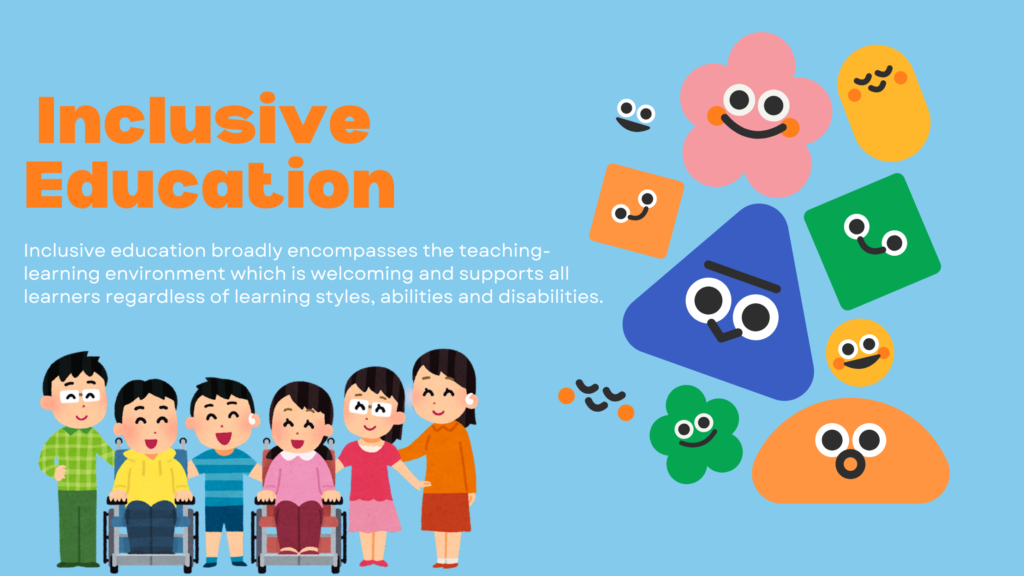
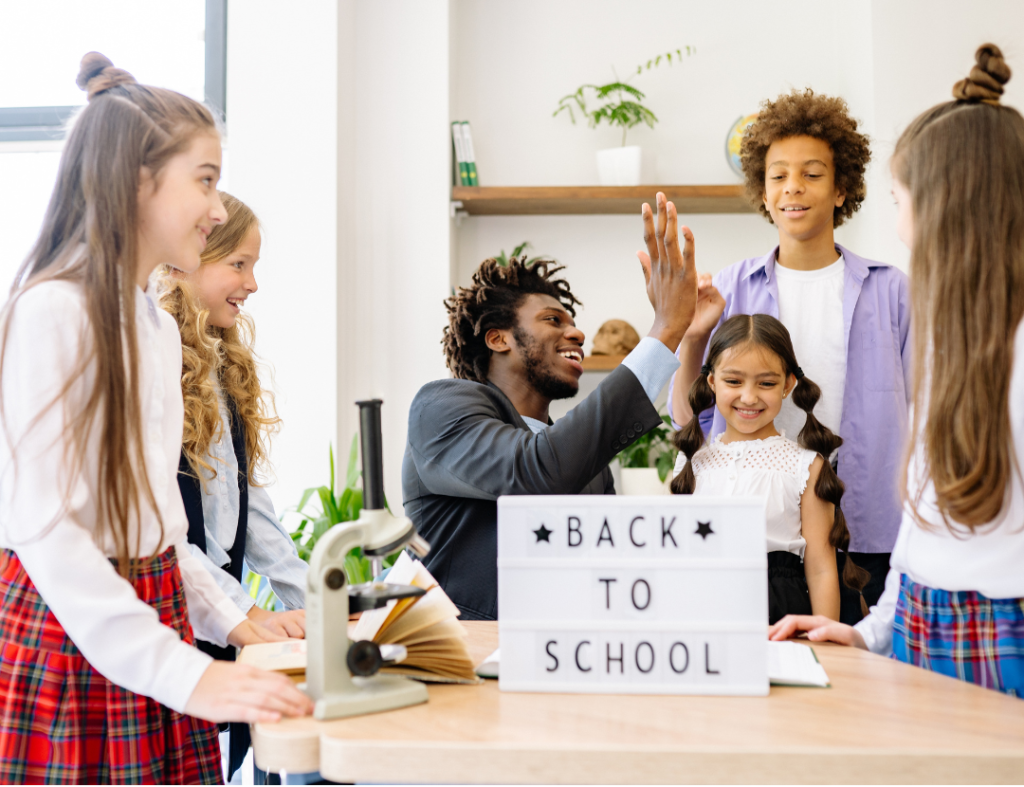
Inclusive education is a way of learning where all the students, no matter what their abilities, disabilities, backgrounds, or differences, are taught together in the same conducive environment. It supports equal opportunity by offering necessary adjustments, eliminating obstacles, and creating an environment of respect and belonging.
Important Principles of Inclusive Education:
Equal Access: All the children have a right to quality education in an inclusive classroom.
Diversity and Acceptance: Identifying and appreciating various learning styles, strengths, and backgrounds.
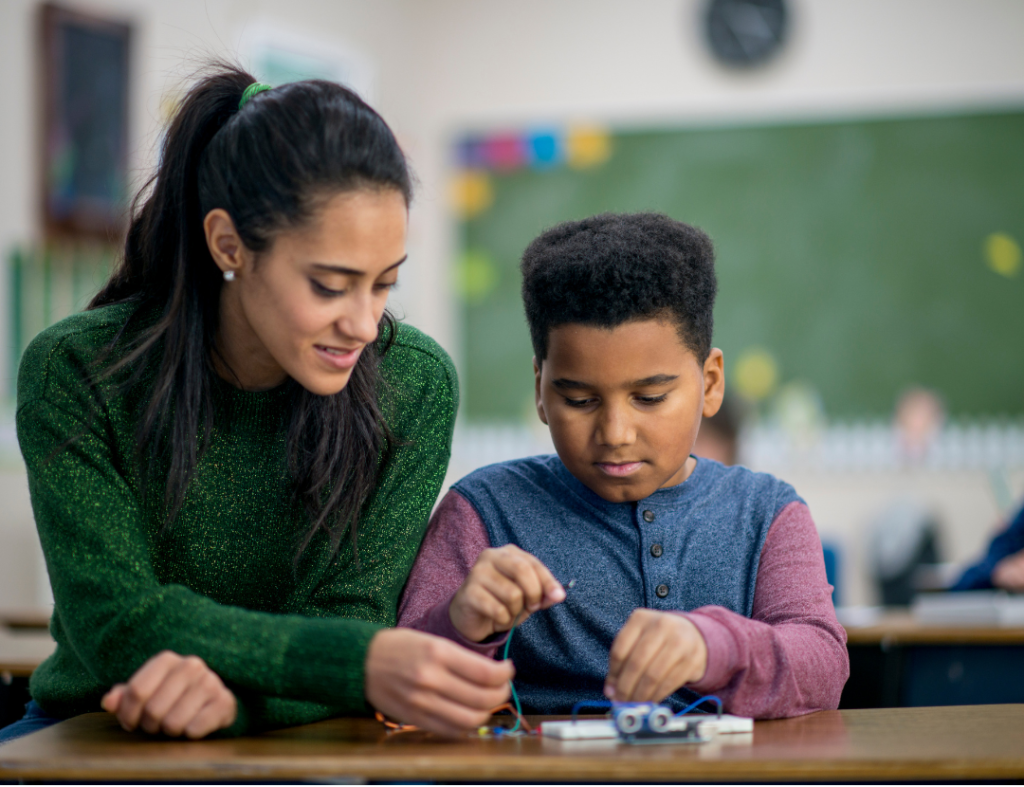
Supportive Learning Environment: Offering required resources, including assistive technology and one-on-one support.
Flexible Teaching Methods:Employing multiple instructional approaches to address different needs.
Collaboration: Fostering collaboration among teachers, parents, and special educators.
Goal:To establish an education system in which all students are valued, respected, and empowered to achieve their full potential.
Features of TIPS Inclusive:
1. Individualized Educational Plan (IEP) – Anindividualized learning plan specificallydesignedforevery student‘s varying needs, strengths, and goals.
2. Speech and Language Therapy – Therapy for communication difficulties, assisting students toenhance speech, language, and social interaction capabilities.
3. Academic-Related Occupational Therapy – Therapyfor fine motor skills, handwriting, sensory processing, and other occupational activities that benefit academic performance.
4. Classroom Inclusion – Facilitating students with varying needs to learn inthe company of peers in anaccommodating and inclusive classroom setting.
What is the meaning of IEP?
An IEP is anindividualizededucation plan for students with disabilities. It providesthemwith the support, accommodations, and services they need to besuccessful in school. The plan outlines learning objectives, instructional strategies, and any special assistance needed, liketherapy or altered instruction. IEPs are mandatedbylaw in most countries and are created by teachers, parents, and specialists to address the student’s individual needs.
Key Components of an IEP:
Current Performance:Evaluation of the student’s strengths and weaknesses.
Goals:Learning objectives that are specific and measurable.
Accommodations & Modifications:Changes in teaching approaches, materials, or tests.
Support Services: Special education, therapy, counseling, or assistive technology.
Progress Monitoring:Ongoing evaluation and reporting to monitor progress.
IEPs provide assurance that students with disabilities get the support they need in order to achieve academic success in an integrated environment.
WHAT IS SCHOOL READINESS PROGRAMME FOR CHILDREN WITH SPECIAL NEEDS
Crayons Montessori, a Montessori-based school in Kukatpally Hyderabad, is launching a new initiative called the School Readiness Programme in collaboration with Cambridge Montessori. This programme is designed to address cognitive, developmental, and language delays that a child may be experiencing. In many cases, children with special needs do not receive the necessary education and academic support required for their growth. Recognizing this gap, we have decided to introduce a School Readiness Programme in Kukatpally, Hyderabad. This initiative will focus on fulfilling both the academic and scholastic needs of children while also equipping them with essential soft skills to help them build a strong foundation for the future.
Montessori Values For Parents and Educators
Respect for the Child
Montessori education recognizes and celebrates eachy child’s individuality, uniqueness, and independent nature.
Freedom within Limits
Children in Montessori can move freely and choose from suitable activities. However, clear guidelines and boundaries ensure order and a focused learning environment.
Hands-On Learning
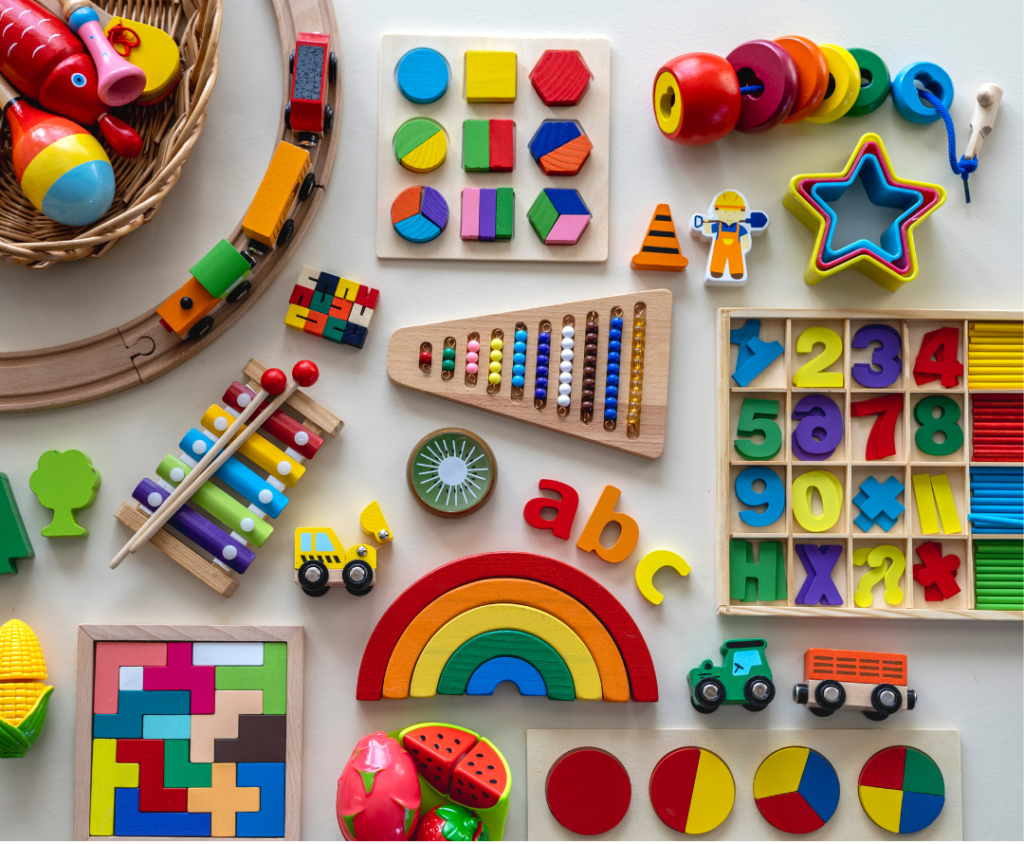
Montessori believed that children learn best through hands-on experiences in the environment. The Montessori materials encourage children to learn by doing.
Child-Led Learning
Montessori educators seek to understand each child’s needs through careful observation. Lessons can then be tailored to the child’s own interests and learning pace.
Peace Education
Montessori believed that education was key to a better world. Children are encouraged to respect others, resolve conflict and self-regulate emotions.
Montessori
Prepared Environment PRINCIPLES
Respect for the Child
Calm and peaceful environment offering child- centered learning tailored to the child’s individual needs
Freedom Within Limits
Freedom to move and explore, choose between suitable activities and learn at one’s own pace
Hands-on Learning
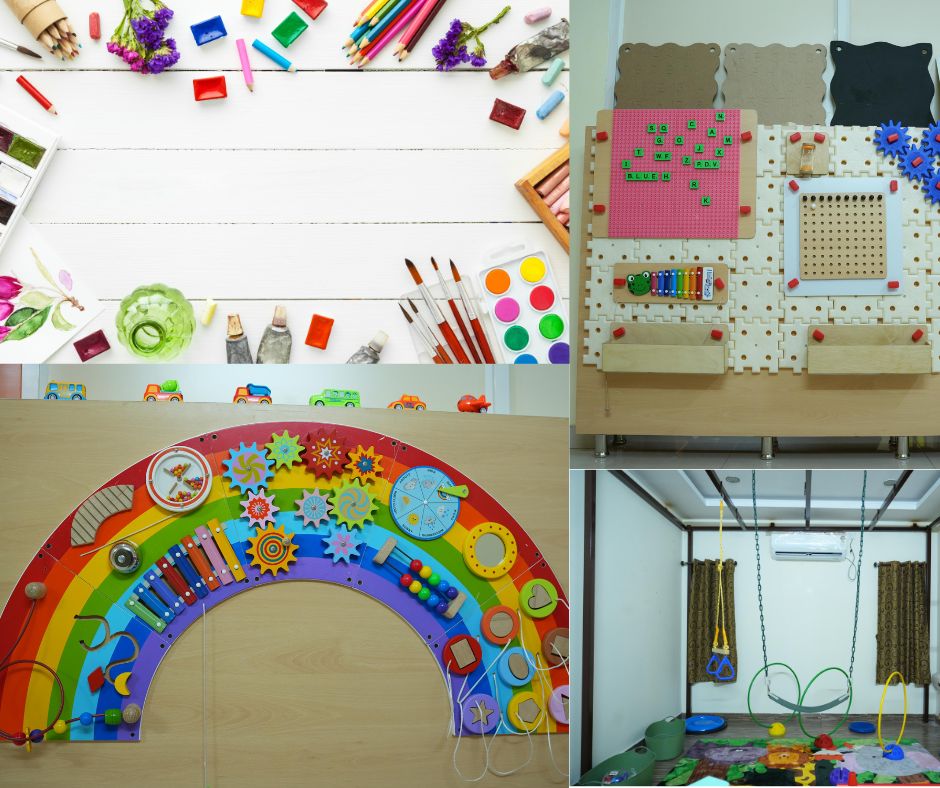
Materials that engage the senses and invite the child to play
Accessibility
Child-sized furnishings and tools support the child’s development and allow for independent action
Simple and Beautiful
Natural materials and uncluttered, minimalistic design helps children focus
Cambridge Montessori Preschool nurtures early learning through play, creativity, and structured activities, fostering independence, social skills, and academic growth in a safe and engaging environment.